
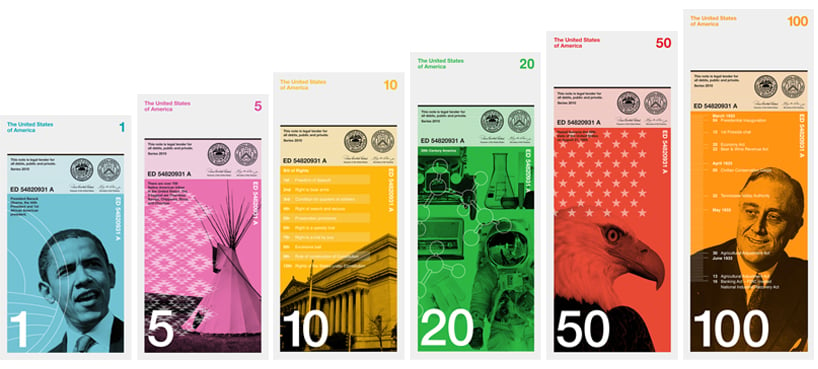
with their vertical format bills, dowling duncan have reignited interest in 'the dollar redesign project'
(which we blogged previously here).
---
following description from dowling duncan:
why the size?
we have kept the width the same as the existing dollars. however we have changed the size of the note so that
the one dollar is shorter and the 100 dollar is the longest. when stacked on top of each other it is easy to see
how much money you have. it also makes it easier for the visually impaired to distinguish between notes.
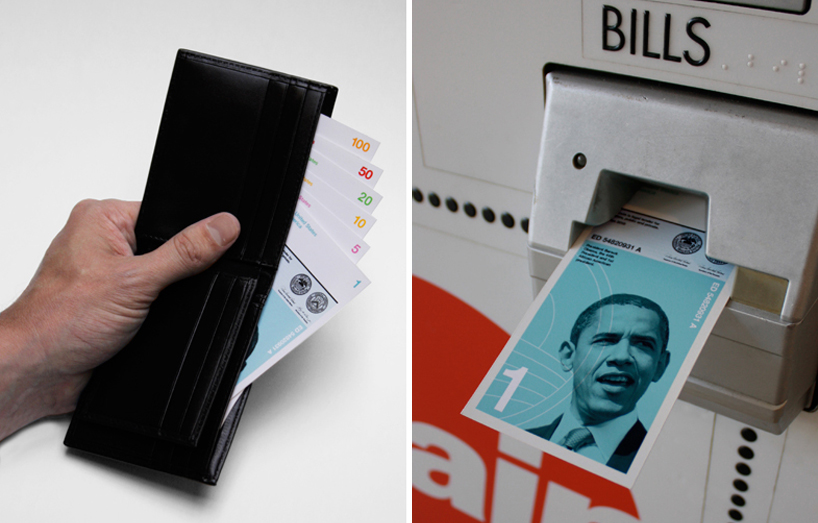
why a vertical format?
when we researched how notes are used we realized people tend to handle and deal with money vertically
rather than horizontally. you tend to hold a wallet or purse vertically when searching for notes.
the majority of people hand over notes vertically when making purchases. all machines accept notes vertically.
therefore a vertical note makes more sense.
why different colors?
it’s one of the strongest ways graphically to distinguish one note from another.
why these designs?
we wanted a concept behind the imagery so that the image directly relates to the value of each note.
we also wanted the notes to be educational, not only for those living in america but visitors as well.
each note uses a black and white image depicting a particular aspect of american history and culture.
they are then overprinted with informational graphics or a pattern relating to that particular image.
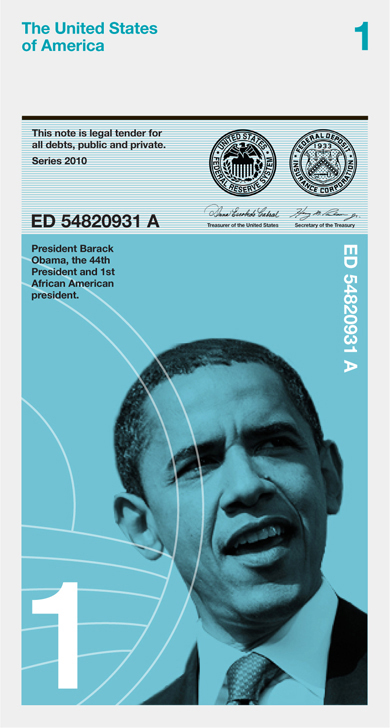
1 dollar bill: the first african american president

5 dollar bill: the five biggest native american tribes
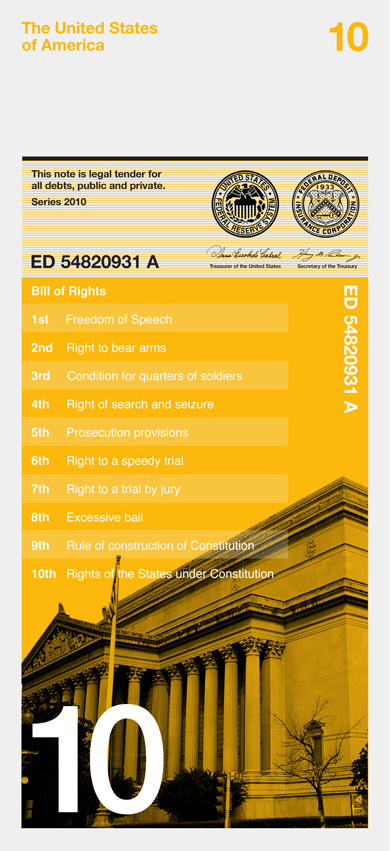
10 dollar bill: the bill of rights, the first 10 amendments to the US constitution

20 dollar bill: 20th century america
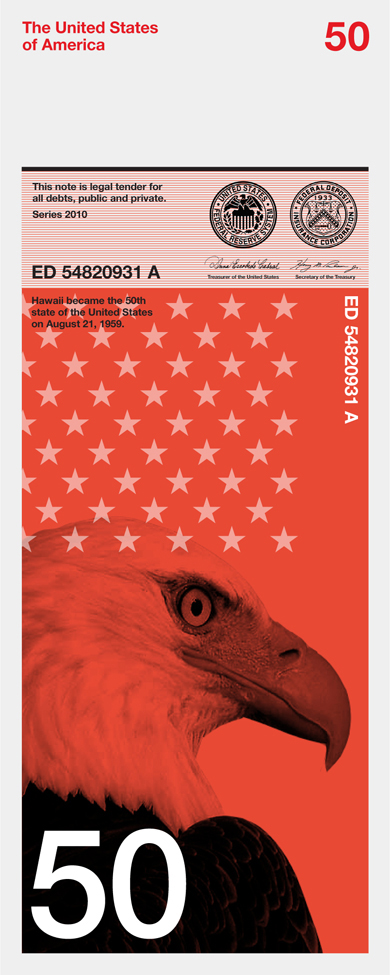
50 dollar bill: the 50 states of america
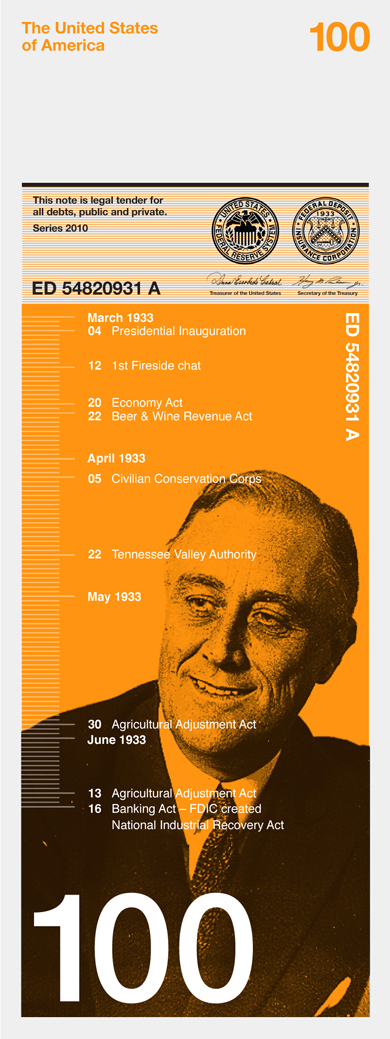
100 dollar bill: the first 100 days of president franklin roosevelt.
during this time he led the congress to pass more important legislations than most presidents pass in their entire term.
this helped fight the economic crises at the time of the great depression. ever since, every new president has been
judged on how well they have done during the first 100 days of their term.
see the project on dowling duncan's website here
"